Life cycle

on Tuesday, 27 November 2018
Life cycle of  Pinus plant
   Pinus is monoecious plant. Both male and female cones are develop on the same plant.These cones are monosporous. Microspore and micerospoerngia are present on the male cone. Megasporengia and megaspore are produce on female cone.They have no vegetative reproduction in  Pinus. A cycle is show for the regeneration of Pinus plant. A new generation is produced with the cycle. Male cone and female cone are present on the same plant. Male cone is small in size. It produce pollen grains. Female cone is larger in size and produce ovule. Pollen grain reach on the ovule and their cycle start.


Embryo Production
   Diploid nucleus divide thrice and produce eight cell. The lower four cell become proembryonal cells. The upper four nuclei are separated by incomplete cell walls. Four proembryonal divides to produce three tires of cell. Embryonal cell, Suspensor cell and Rosette cell are the three tiers cell of embryo. Embryonal cell. Embryo Cell  The cells of the lower tiers become embryonal cells. The four embryonal cell separate from each other. Each  embryonal cell develop into embryo independently. Embryonal cell forms secondary suspensor cells. The formation of a more than one embryo form a single fertilized oosphere is called polyembroany. Only one embryo is reach maturity. 
   Suspensor cell  The cell of the middle tier become suspensor cells. Suspensor cell elongate very much. It pushes the developing embryos into the prothalial tissue for nurition.  Rosette cell  The cells of the upper tiers are called the rosette cells. These cells do note take part in the development of the embryo. A fully developed embryo is in the form a short straight axis. Its radicle is present towards the micropylar end. Plumule present toward the inner side which is surrounded by the cotyledons. The unutilized tissue of prothalial form endosperm. The persistant nucellus tissues near the micropylar end form the perisperm. The integument become hard testa. Some part of the ovuliferous scale fuses with the development seed. It makes a large wing for dispersal of seed. The axis of the female cone rapidly increase. It produce gaps in ovuliferous scales. The cone become woody.
Seed germination
     The radicle grow out. It splits the testa at the micropyler end. This radicle grows down into the soil and form the primary root. The hypocotyl  elongates to form a loop. Then it become straight. It carries with it the plumule and cotyledons. The testa is also carried up with the cotyledons. The plumule forms the first main shoot. It develops foliage leaves spirally.  Pollination   Each ovule secretes a mucilaginous drop at the micropyler end. A gap is produce between the end of the ovliferous scales. It forms a passage for the entry of pollen grains. Wind carried pollen grains. The mucilage drop entangles the pollen grain. Pollen grain is carried through micropyle to the surface of the nucellus. Fertilization   The pollen grains resumes its activity in the spring. Generative cell divide in to two unequal male cell or sperms. Male cell passes down to the tip of the pollen tube. The pollen tube grows through the nucellus. It passes nucleus fuses with the oosphere to form oospore. The other degenerates. Fertilization us completed in June in next year.
    

Living fossil

Cycas plant as Living fossil

Cycas is ancient plant. Little change is produce in it. It has retained most the primitive characteristics.It is therefore commonly called as living fossil. It means that it is plant which is present in current form like its fossil form. It retained many features. These feature are. 
 (1)   It is small plant with unbranched stem and pinnate leaves. 
 (2) Like extinct plants cycas retain fern like leaves. Its seeds are present on the leaves. 
 (3)  Their stem contain a large pith scanty wood and thick cortex. 
 (4)  Stems of cycas and stem of ferns are covered with persistant leaf bases.Their foliage is               fern like.Both show circinate vernation. 
 (5)  Ferns and Cycas both have leaf like mega sporophylls. 
 (6)  Female sporophylls of cycas form a loose crown. It is like male sporophylls of                            Bennettitales.    
   (7)  Its ovule is large in size and naked. The structure of their ovules is resembles                              with seeds.     
  (8)  Cycas retain large out put of microspore form microsporangia
  (9)  Sperms have flagella and thus motile both cycas primitive plant. 
     Fossil resin or amber  It is obtained from the Pinus succinfera. Wood of pinus is used for doors poles and beams. Plywood is prepared from Podocarpes.  Papers like newsprint writing and paper printing are formed from wood pulp of Pinus, Picea and Gnetum. The leaves of cycads are used  for preparing baskets, mates and hats etc. The Fibers are obtained from the leaves of Cycas and Mycrozamia. These are used for stuffing pillows and making mattresses. These are also used for different other perpases. 

Angiosperms Plants

Angiosperms 

       Angiosperms are flowering plant. Their seeds are covered by fruits. Their fertile leaves bear ovules. Flower are produce on these flower. They are also produce seed. The fertile leaves are folded and joined from ovaries. The ovary us changed into fruit after fertilization. They have more than 235,00 known species of angiosperms. Angiosperms are hetrosporous plants. These are most successful plants of earth. These plants produce flower fruits and seeds. Body of Plants The  plant body angiosperms is saprophyte. It is composed of root, stem and leaves and reproductive part (flower). Root is used for anchoring and absorption of water an salts.Roots shows both positive and negative phototropism. Some plants root is used for vegetative reproduction. Stem is supportive structure. Stem  geoteropism is  negative  and positive phototropism. Leaves arise form the branches of stem. Leaves have pedicel and lamina. Mesophyll cell is present in the lamina. Their function is absorption of light and photosynthesis. Stomata of  leaves exchange gases and perform transpiration. Flower is reproductive part of the body. It has sepals, petals, stamen and carpel.


Process to reproduce  
     Microsporophyll (stamens) are male reproductive part of flower. Their number is variable in species. It consist of anther and filament. The anther consists of  four pollen sacs.Each stamen is develop from separate primordium from floral axis. 
Megasporophyll (carpel) is female part of flower. It has central position in the flower. A carpel has three part ovary, style and stigma. Basel broader part of carpel is ovary. Stigma is terminal part of carpel which receives pollen grain. Ovule  Ovary contain one or more than one ovule. Ovule consistes of and outer integuments and inner nucellus tissue. Ovules are borne on specialized tissues called placenta.  The position of placenta is variable in ovule. Double fertilization  The fission of two male gametes with two cells simultaneously is called double fertilization.  It special process.  It is found in angiosperms. The pollen tube grow through style. It enters the ovule and reach female gametophyte. Male gametes release there. One male gamete is fuse with egg and form zygote nucleus. This zygote nucleus is  secrete thick wall around it and become oospore. Oospore is first cell of the saprophyte generation. The second male gamete is fuses with secondary nucleus and form primary endosperm nucleus. So it called double fertilization. It is also known as triple fusion.  

Seed 
      A ripened ovary protected by seed coats enclosing a resting embryo provided with stored food either in endosperm or cotyledons is called seed. Seed may be endospermic or albuminous when  endosperm is present grain of maze. It may be non endospermic or ex albuminous in which food in endosperm is digested and stored in cotyledons (pea seed). There are different structure of seed in dicots and mono cots.  Dicote  has di cotyledonous seed. Dicotyledonous seed is, seed with single cotyledons e.g pea seed. In dicot seeds the embryo consists of a short axis. The embryonal  leaves are attached to it. The part of  the axis above the point of attachment of cotyledons is epicotyl. The part of the the axis is below the point of attachment of cotyledons is hypocotyl. At the upper end of the epicotyl a minute bud called plumule. It is present between the two cotyledons. It gives rise to embryonal shoot. The lower end of the hypocotyl is radical which give rise primary root.  
Monocots have mono cotledonous  seed grain maize. In monocot seeds the cotyledons is terminal.The upper part of the embryonal axis bears plumule and the lower contains radical 
            
Fruit
      The  ripened ovary is called fruit. The seed are enclosed with in fruits in angiosperms. It protects and disperses seeds. The ovary wall undergoes changes to form the fruit wall (pericap). It pericap may be dry or fleshy. Seed usually undergoes a period of rest. It germinates in suitable and produces a seedling. This seedling gradually.   

Cycles of Plants

Cycles Take Place in Plants Life

      In the life of plants many cycle occur. Plants are prepare its on food in photosynthesis process. Production of glucose take place in the process of gylycolysis. Many other process are also take place in the life of plant. Some of these are Aerobic respiration,Krebs cycle etc.

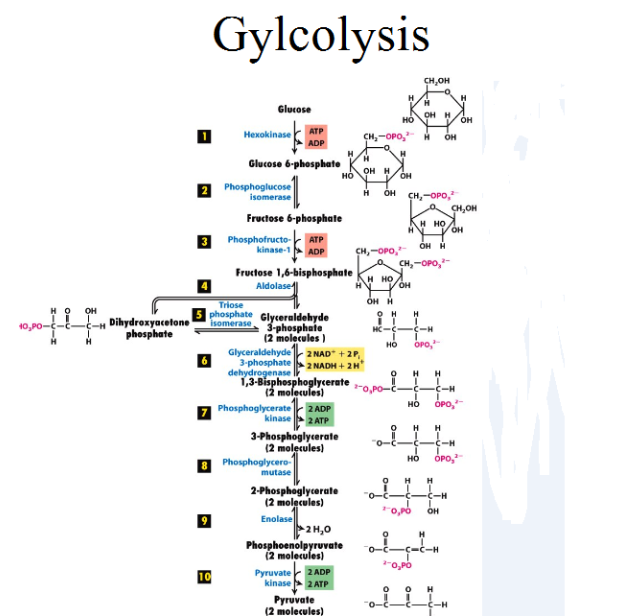
       Glycolysis   Glycolysis is the initial step of catabolic chemical reactions. It occur almost all the cells. Six carbon glucose molecule is broken down into two molecule of pyruvate during glycolysis. Nat production of ATP is two. Four molecule of ATP is produce in glycolysis but two are used to rearrange the glucose molecule. This process is complete in ten step. In the First step Glucose is enter in the cell. It is phosphorelated  by an enzyme hexakinase. During the Second step  Glucose 6-phosphate is rearranged. It converted into its isomer (fructose 6-phosphate). Third step use the another ATP molecule. Enzyme transfer a phosphate group from ATP to sugar. It from fructose 1,6-diphosphate. Step which give name to the glycolysis is Step four. An enzyme breaks the fructose 1,6-diphosphate in to two different three carbon sugars. These two sugar are isomers of each other. These sugar name is glyceralaehyde 3- phosphate and dihydroxyacetone phosphate.Step five Another enzyme catalyzes the reversible conversion between the two 3- carbon sugar. It converts the all molecule of dihydroxyacetone phosphate into gyceraldehydes 3- phosphate.
      Last four step is energy yielding steps. Step six  Reaction is catalyzes by enzyme. 1st sugar is oxidized by the transfer of electrons and H+ to NAD and from NADH+. This reaction is very exergoinc. Seventh step  Finally glycolysis is produce some ATP. The phosphate group added in the previous step is transferred to ADP. It forms the 3-phosphoglyceric acid. This is not sugar. Step eight Next an enzyme relocates the renaming phosphate group and form 2-phosphoglyceric acid. Ninth step  Remove the water with the help of an enzyme.Step ten is last step of glycolysis. In this reaction transfer of phosphate is form PEP to ADP. SO it produce more ATP.

Aerobic Respiration

Aerobic respiration took place in microorganisms and mitochondria of some organisms. This reaction is also take place in plants. The evolution of aerobic respiration has made the organism efficient. It provide them powerful and efficient way of the removing energy from nutrient molecules. Life would become slow without mitochondrial ATP production.  Aerobic respiration is explain with the help of a reaction.

       Pyruvate + O2  ==> CO2 + H2O  + 34  
    
This reaction produce 34 molecule of ATP.Aerobic respiration organised into a number of reaction. Each reaction is catalyzed by a specific enzyme. There are two step of aerobic respiration. Krebs cycle and  electron transport chain. Krebs cycle is series of  reaction  in which pyruvate from gylcolysis is oxidized to CO2. Hans Krebs discovered this reaction. Electron transport chain  The collection of molecule embedded in the inner membrane of the mitochondrion is called electron transport chain.  

Plants Diseases

Plants Diseases 

    Many diseases are produced in the plants these are very harmful for plants. Some diseases are  destroy the crops. These disease like rust, smut. Some of these diseases are given below. 

Ustilago (Smut) 
    Ustilago is parasite on the grasses like wheat. It is commonly called smut. It attacks on the overies of grasses. Some time it completely destroy the whole ears of wheat plants. Different types of Ustilago effect the different plant. Some of these are Ustilago tritici which effect the wheat plant.Oat plant is effected with Ustilago avenae. Ustilago zea attacks on maize. Structure of smut. Mycelium of Ustilago composed monokaryotic and dikaryotic hyphae. The hyphae is septate. The primary mycelium is monokaryotic. It is short lived and does not grow much. Secondary mucelium is dikaryotic. Mycelium is intracellular or extracellular.
Effecting of Ustilago
       It has different ways of ustilago effecting the plants. Ustilago attacks on the mature wheat plant in spring. Ears of wheat are produced in this season. The ears in the diseased plants are emerge earlier than the healthy plants. These ears are covered with black powdery mass. This powdery mass great Chlamydospores  or Teleuto spores.Each spore is unicellular and binucleate. It is thick wall.

Effects with formation of promycelium
        Chlamydospores are dispersed by wind. They fall on the ears of healthy plants. They germinate on the ear. Their nuclei fuse to form diploid zygote nucleus. The zygote nucleus is undergoes meiosis. The spore are produces a short germ tube or promycelium (primary mycelium). Basidiospore  Each cell of promycelium produce a sterigma. Basidiospre are produced on the sterigma.  

Puccinia  ( Rust)

       Rust is large genus. It has several obligatory parasitic species. Puccinia graminis  has many form. Each form specific host. They are parasite in wheat, corn, barely and rye etc. Puccinia tritici is parasite of wheat. It completes its life cycle in two different hosts wheat and barely. It is hetercious rust.Rust attacks in different stages. These stages are five in number. First stage in Uredinial stage Its infection is appear in March. Reddish brown pustules or sori is appear on the stem of wheat. These sori named as uredosori. Uredosori contain numerous uredospores. These are globose and thick walled spores and borne on the long stalks. Telial stage is second stage of  rust. These spore are produced in the end of growing season. Some hyphae develop teleutospore. The colour of these spore is dark red or rusty. These spore are oval in shape with tapering ends. They have constriction in the middle. Teleutospore are not grow immediately.
     Basidial stage Teleutospore  germinates in the next spring on the soil. Each teleutospore produce a germ tube called promycelium. Two nuclei of each cell fuse to form diploid nucleus.Pycnial Stage Haploid basidiospores  infect second host barberry. They fall on the leaf of barberry. They germinate to produce a small germ tube. The germ tube penetrates the cuticle and enter epidermal cell of leaf. Aecial stage is last stage. Soermatium attach on the receptive haypha of opposite sexual strain. Its nucleus migrate into hyphae through receptive tube


Other Virus of Plants 

Tobacco Mosaic virus   TMV is RNA virus. Its capsid is coiled and rod shape. It attacks on stem and leaves. In there attack leaves become wrinkle and molds. These mosaics are present  in   the   form   of   light   green  spots.  These  spots  become  narrow  and  stunted. 

Mosaic virus  of cucumber and lettuce    Virus also causes in the cucumber and lettuce   plants.    These   viruses   are  mostly   spread   by   pest   like   aphids   and   leaf   hoppers.

Cotton leaf curl virus or  LCV   This virus attacks on cotton plants. It caused huge cotton losses in different countries.  LCV is spread by white fly named Bemisia tabaci. 


Diseases of some other virus


       Virus cause many disease. Yellow disease of Potato It is caused by infectious particle called viroid. The tomato plant fell down wilt and become dry. Necrotic diseases In this disease virus kills the leaf of plant by necrosis. This disease occur in potato and tomatoes. Tumors  Many virus cause tumors in tomato cucumber and tobacco plants.


Plants Classifications

on Saturday, 17 November 2018

Classifications of Plants 

 Classification System 
    The arrangment of plants into groups and sub groups on the basis of similar called classification. The characters are uses as basis of classification called criteria of classification. The major criteria of classification are morphology anatomy, Playnology, Karyology , Emberology, Serology and Phytogeography. Criteria is depend on the new investigation.Basis of  classification system. Earlier cell wall is basis of classification system. Later five kingdom system were produced for kingdom of classification.The system of classification is also based on vascular tissue. The plants containing vascular tissues are tracheophytes. Plants are divided on the the bases of seed producing and non seed producing plants. 
         Units of Classification    Unit of classification is called texa. Each texa or category is more general than the texa below it. The member of lower category resemble more with one an other than higher category. Different units of classification is used. These units are  Species is group of natural population which can interbreed freely among them and produce new generation is called species. Each species has its own distinct structural, behavioral and characteristics. Different species does not exchange gene between them. So species is independent unit from the evolutionary unit. Species is further divided in to Sub species, Variety and Form. Genera  are composed of one more similar species. Example Solanum tubersum, Solanum nigram are placed single genera Solanum. Families  Similar genera form family. Order  Similar families form and order. Class  Similar order combine and form class. Phylum or division Similar classes from phylum. Phylum is also called division. Like plants algae and fungi. Kingdom  Similar phyla a kingdom. There are two kingdom. Animal kingdom and plant kingdom.


 Main Classification System

         There are four system of classification These system are. Artificial System The  classification system based on one or two morphological characters for the identification of plants is called artificial system. The criterion of classification is too arbitrary. It based on observable characteristics. This system grouped many umrealted plants. This classification  does not show affinities among different groups. Linnaeus system is example of artificial system.  Natural System The classification system which based on set of characteristics for grouping similar plants is called natural classification system. Various plants are grouped purely on the basis of morphological similarities in this system. The plants in this group share  many natural affinities. Darwin had proposed this the theory of natural selection. Phylogenetic System  The classification system which grouped plants on the basis of set of morphological characteristics and phylogenetic relations is called phylogenetic system of classification. This system is based on affinities and evolutionary relationship among the plants. It is most turning point in history of classification of plants. It include Darwin  concept of evolution. Evolution joins the different groups of plants into tree of phylogenetic group. Engler and Prantle classification system is example of phylogeatic classification system  Modern System  The classification system in which plants are grouped on the basis of morphological characters and modern studies like anatomy, palynology, karyology and embryology  is called modern classification system. It is based on new reformation in plant taxonomy. Now DAN and RNA nucleotide are also studies to arrange plants more scientifically. The Takhtajans classification system is example of this system of classification .

 Importance of Classification System


  • Classification has great importance.Classification arranges the plants in different systematic groups. It makes easy for study of plants.It has very effective role in studies 
  • Classification gives phylogenetic relationship among the plants The evolution of plants can be studied form classification.It make the plants study easy and clear information.
  • Different members in taxonomic groups have similar characters. Thus the study morphology, anatomy and cytology of one member give the idea of structures.
  • Classification also gives Phytogeigaphy of plants. Similar plants include same group.
  • Different morphological and physiological characteristics can be predicts from classification of different groups.                                      


Leaf

on Tuesday, 9 October 2018

                                              Leaf

Definition: Leaves are green flat structures borne on the stem or branches called leaves.Leaves arise form the node.They have bud in their axil. Leaf produce food by photosynthesis.They also carry on transportation

Parts of leaves 

  A typical foliage leave consistes of three parts .Leaf blade or lamina is green expanded portion of leaf.It perform photosynthesis. Petiole The leaf stalk is called petiole. It is absent in some leaf .Therefore lamina is directly attach with stem. Leaf base is part of leaf which attach attach to the stem. They form sheathing in many monocotyledons. Chief Types of Leaves  there are following types of leaves. Foliage leave ordinary green leaves is called foliage leaves.They carry photosynthesis. Cotyledonary Leaves The leaves found in seeds and store food is known as cotyledonary leaves.Scale Leaves  small undeveloped sessile and colorless leaves is called is called scale leaves.Bracts and Bracteoles special leaf in axil of which flower arise.They are usually small and scale like. There primary function is protection.Floral Leaves The specialized leaves which form the part of flower.These are stamen carpel petal and sepal.
       Pair of outgrowth develop on at the base of petiole of the leaf is called stipules. It is present in many angiosperms plants. If stipule is present then it called stipulate.If stipule is absent then it called ex stipulate. some stipule remain in place as long as leaf persists. The stipule like stricture present at base of a compound leaf  called stiples. Its has different types like Scaly stipules, Leafy stipules, Free lateral stipules Adnate stipules ,Axillary stipule, Ochereate stipule, Tendrillar stipule and Spinous  stipule. Phyllotaxis The arrangement of leaf  on the stem is called phyllotaxis. Phyllotaxis reduce overcrowding.Therefore the leaves get maximum sunlight.There are two main types of phyllotaxis. The main type of phyllotaxis is Spiral and cyclic. The phyllotaxis in which single leaf borne at each node is called Spiral phyllotaxis. In this leaves are alternate. Example Sunflower and mustard. The phyllotaxis in which two or more leaf borne at each node is called cyclic phyllotaxis. They have 2 forms opposite cyclic phyllotaxis. Second is world cyclic phyllotaxis. In the case of opposite only two leaves are arise at each node.They are opposite to each other.This condition is opposite.It has two other forms.It has two types 1 is opposite and superposed and 2 is opposite and decussate. Whorled  More than two leaves are present at each node.These are arranged circular shape.
 Venation
       The arrangement of veins and veinlets in the leaf at lamina is called venation.Vein and veinlets dissolved water and minerals into other parts of leaf.It carry prepared material from leaf to stem.The lamina have one or more principle veins. They are also called midrib.There are different types of venation. Parallel venation and  Reticulate venation.
   Leaf are present on the stem for different time. Some leaves are fall early and some re present for long time.
    Caducous: If leaves falls early is is called caducous.Example opuntia. Leaf of some plant falls early.When they produce on the stem as soon as they falls.Their life time  is very short.They does not remain with plant. Deciduous: During this condition leaf are falls off  at the end of each growing season.Example Mulberry. Persistant: The leaves are remain functional on the plants for more than on growing season.
 Presence or Absence of petiole Leave have different types. Petiolate  Leaf stalk or petiole is present.Example Mango, Apple,Peer. Sessile In this case petiole is absent.Its example is poppy.Sub sessile Petiole is very small.Example is Calotropis.